Timber · Composite · Raised decking for slopes
Timber and composite decking across Leeds and West Yorkshire, including raised decks that turn a sloping garden into a level space to sit out.
Decking gives you an outdoor room for eating, relaxing and entertaining, and it's often the best answer for a steep garden. A deck can be built up on a frame from the low side of the slope, whereas a paved patio needs level ground, which can mean a lot of digging and retaining walls.
With the range of boards, colours and finishes now available, a deck can suit a modern home or a traditional one.
A deck makes good use of awkward ground, gives children a clean, safe surface to play on and is level underfoot, so it's easier to get around than uneven ground or steps. Built-in seating, lighting and planters can be added to create separate areas.
Upkeep depends on the material. Composite needs little more than a wash; timber needs cleaning and re-staining or sealing every so often to keep it looking its best.
The material is one of the biggest decisions, because it decides the cost, how long the deck lasts and how much maintenance it needs.
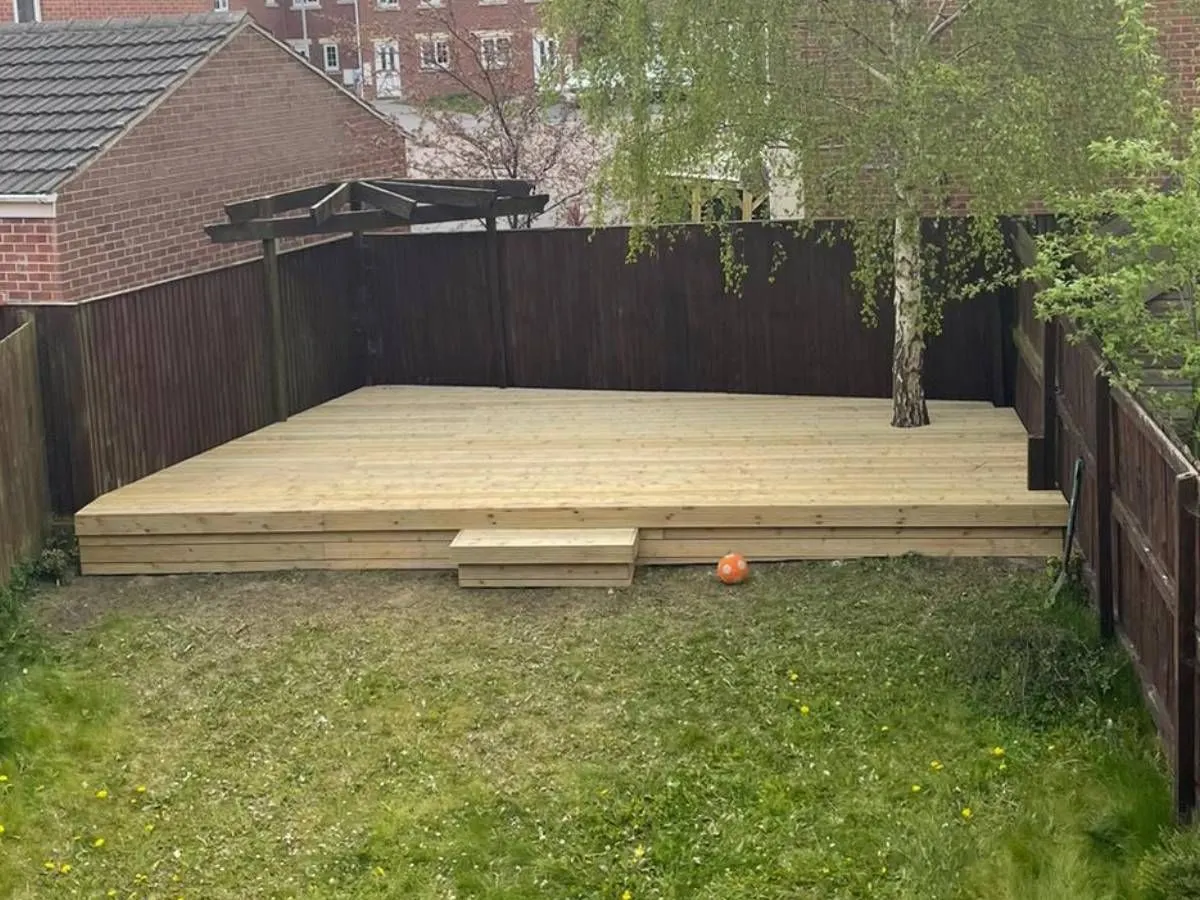
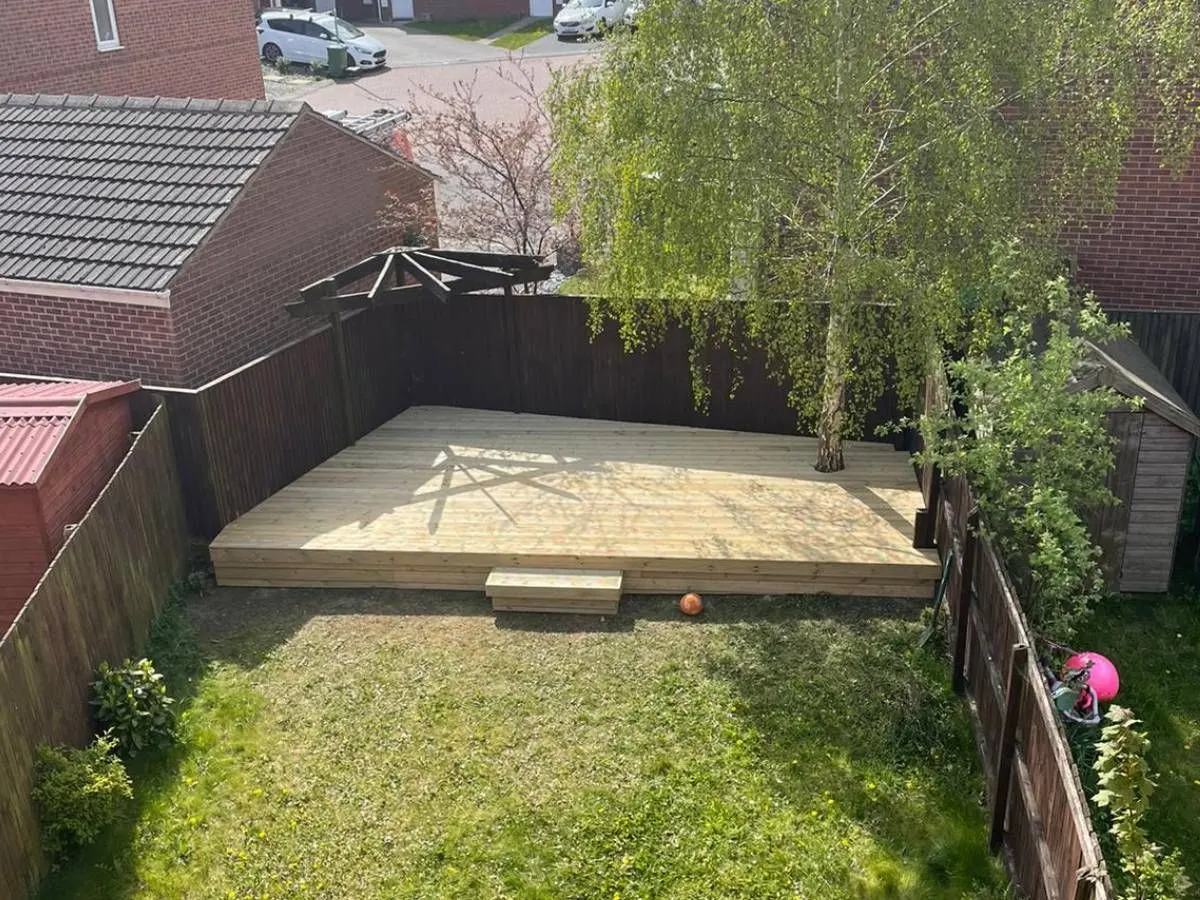
We agree the layout, size and shape first, taking account of how you'll use it and anything in the way, such as trees. The ground is levelled and compacted, because a solid base is what makes a deck last.
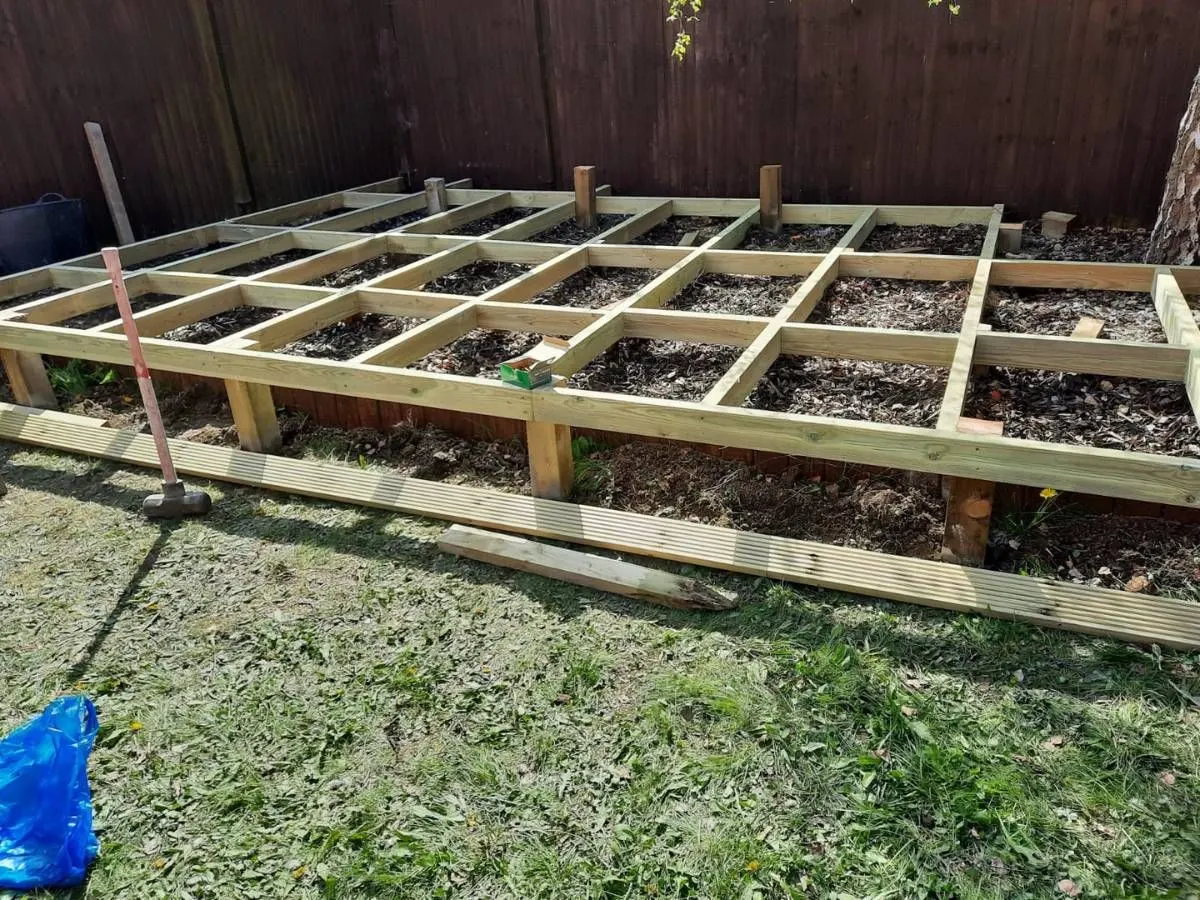
Then the frame goes in. Pressure-treated timber is the most cost-effective; some composite systems use their own steel or aluminium frames. Posts, beams and joists are set out at the right spacing and fixed securely. The boards are cut to fit, with a small gap between each one to allow for expansion.
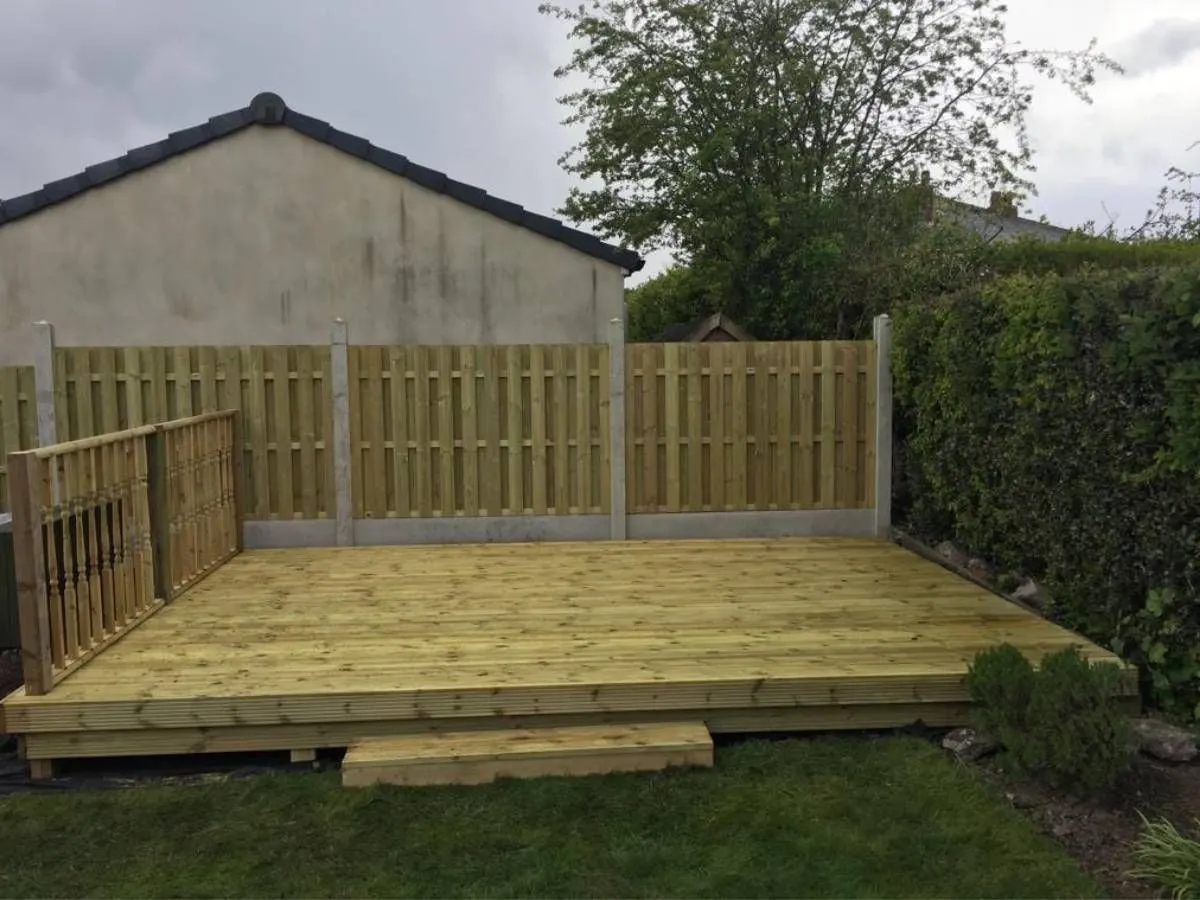
A raised deck is often the best way to make a sloping garden usable. Posts set at the right height carry the joists, giving a flat surface without digging out the slope. The ground underneath stays as it is, so water keeps draining away from the house.
Different levels can also break up a long slope into areas for sitting, eating and pots.
© 2026 All Rights Reserved | Paving Leeds - Leeds paving contractors