Block paving · Indian stone · Gravel · Concrete · Cobbles
Block paving, Indian stone, gravel, concrete and cobbled driveways across Leeds and West Yorkshire, built on groundwork that stops them dipping, sinking or cracking.
Few projects change the look of a house as much as a new driveway. It improves kerb appeal, gives you somewhere practical to park, and can add value to your property. Choosing the right contractor matters, because most of what makes a driveway last is underneath it.
Our team has been laying patios and driveways for years, and the groundwork is where we put the effort. A properly excavated and compacted base is what stops a driveway dipping, slumping or cracking.
Drainage matters just as much. You don't want to step out of the car into a puddle, or have part of the garden waterlogged by run-off. We plan where the water will go before anything is laid, and we can finish around the new driveway with walls, borders or planting to complete the job.
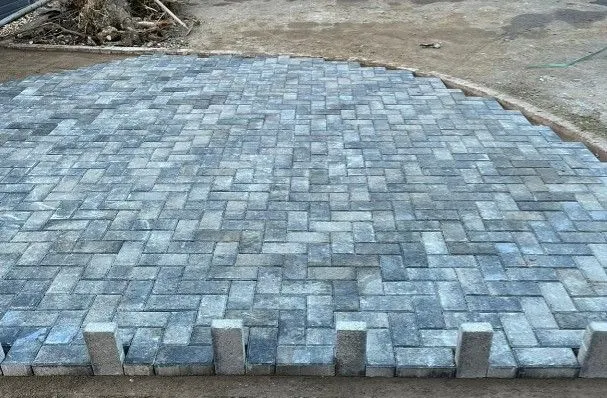
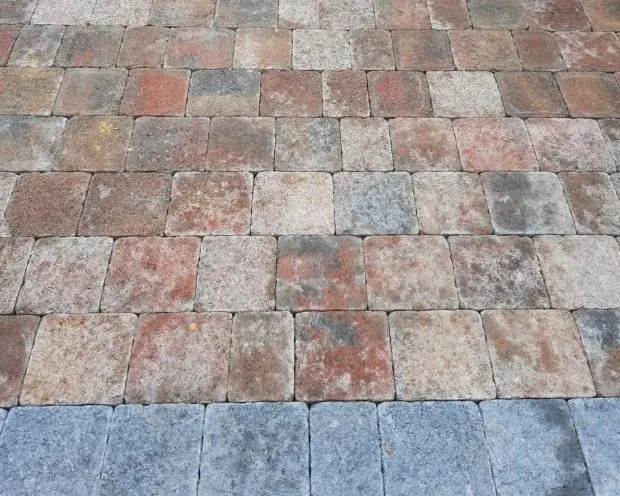
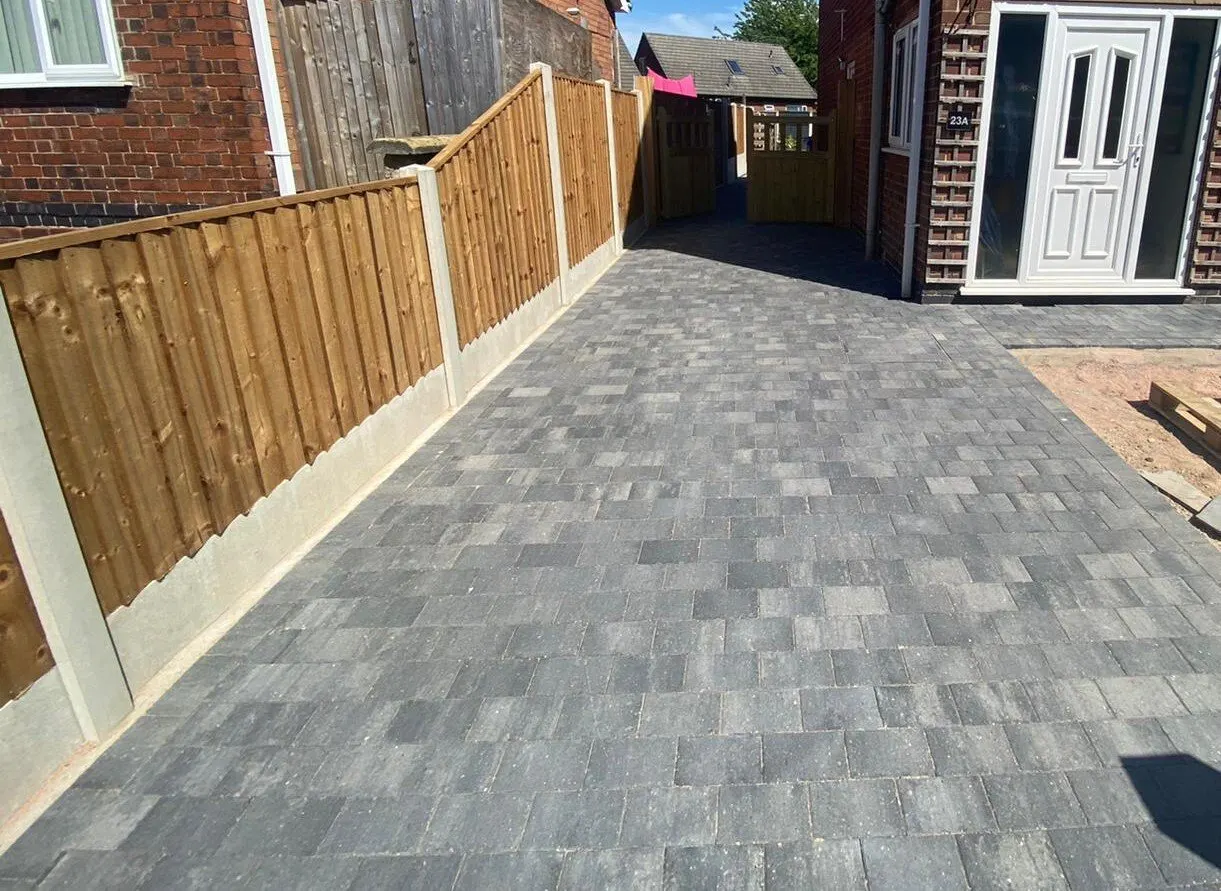
Block paving remains one of our most popular driveways. Concrete or clay blocks laid on a compacted sub-base and sand bed give a hard-wearing surface in a huge range of colours and patterns. See our block paving page for colours, patterns and repairs.
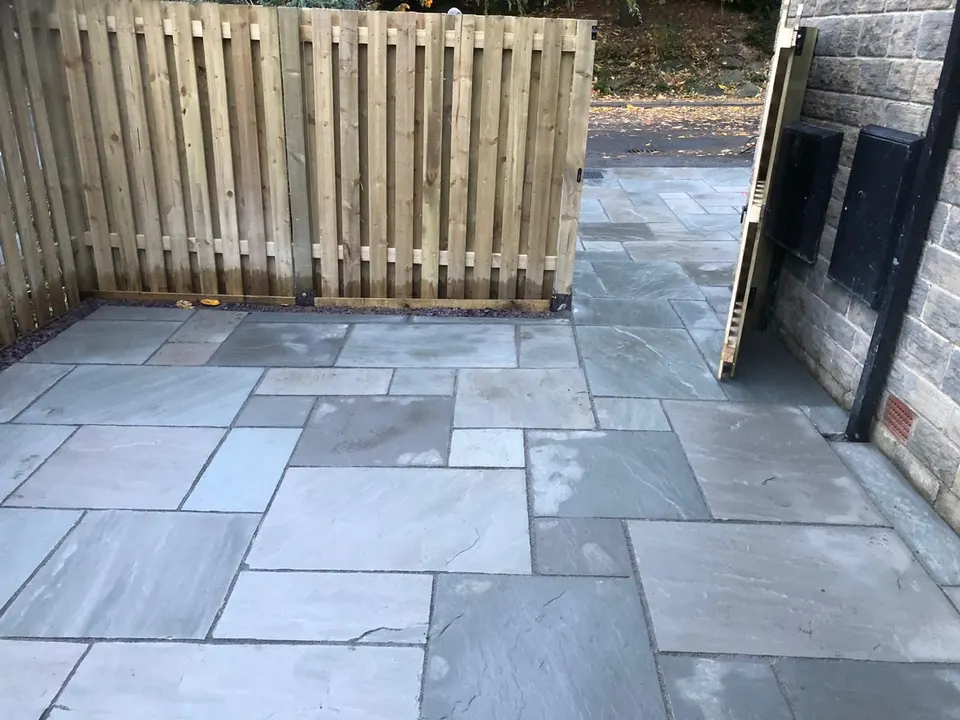
Indian stone is a natural stone, originally quarried in India, known for its durability. It comes in a range of colours, sizes and thicknesses. The thicker slabs are the ones for driveways, while thinner slabs are for patios. Driveway-grade slabs can be used on a patio, but you'd be paying for more stone than you need. Going the other way and using patio-grade slabs on a driveway usually costs more in the long run in broken slabs.
Its natural variation means there's a suitable stone for both modern and period homes. It generally needs less upkeep than block paving, which can need re-sanding to keep weeds and moss out of the joints, and it's seen as a more premium finish. Mixing shades and sizes gives a driveway nobody else on the street will have. See our Indian stone page for more.
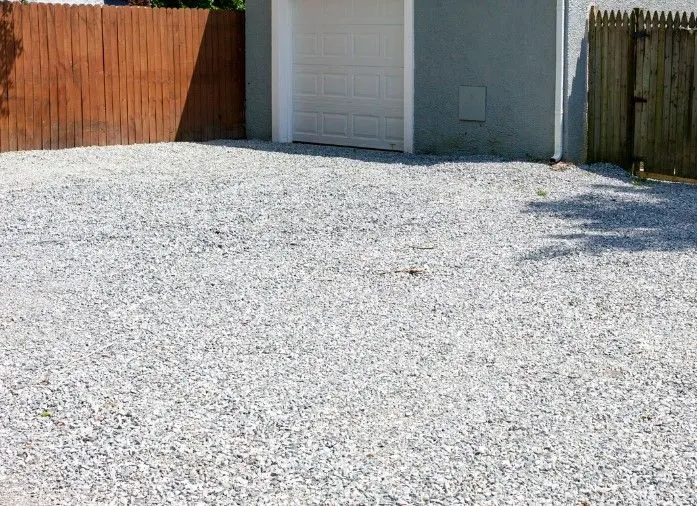
Gravel is one of our most cost-effective options: low-maintenance, naturally permeable and quick to install. See our gravel driveways page for how we lay it and the planning rules.
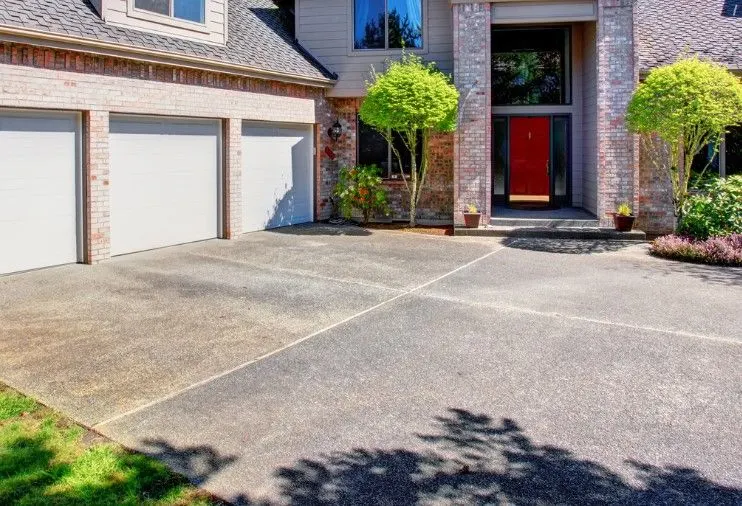
Concrete is chosen mainly for strength. It copes with heavy loads, which is why it's popular with tradespeople who park vans and load them every day. It needs only occasional cleaning and sealing, whereas tarmac and imprinted concrete need resealing more often. Most concrete driveways are left standard grey, which makes any repair easier to blend in.
Plain concrete can crack in freeze-thaw weather. Laying it in sections with sealed expansion joints, rather than one solid slab, keeps that in check. It's also impermeable, so extra drainage may be needed depending on the slope. We'll go through all of this at the survey.
Cobbled driveways use natural stone, usually granite, shaped for paving. They're hard-wearing, weather well and have a timeless look that suits period properties. The area is dug out to suit the depth of the cobbles, a crushed stone base and membrane go down, then a levelled sand bed. Tight-fitting setts are laid in sand and lock together; rounder cobbles with wider gaps are set in mortar before a final sand mix is brushed in. The more intricate the pattern, the longer it takes and the more it costs.
In a front garden, a new driveway over 5 square metres normally needs planning permission unless it's permeable or drains to a lawn or border. Gravel and permeable block paving avoid that in most cases.
If you need a new dropped kerb to get onto the driveway, there's a separate council process for the work on the pavement. Our dropped kerb guide explains how it works in Leeds.
© 2026 All Rights Reserved | Paving Leeds - Leeds paving contractors